Celtic Cross tarot spread
When a question feels too big for three cards, the Celtic Cross gives you room to explore. It is one of the best known tarot spreads, described by A. E. Waite in 1910, and it uses ten cards for a fuller look at a situation. Take your time with it; we walk you through every position below.
Positions
- The present: the heart of the matter.
- The challenge: what crosses you, laid across card 1.
- The foundation: the root of the situation.
- The recent past: what is passing.
- The crown: what you are aiming for or aware of.
- The near future: what is approaching.
- Yourself: your attitude.
- Environment: other people and surroundings.
- Hopes and fears.
- Outcome: a likely direction if nothing changes.
Layout
Cards 1 to 6 form a cross: card 1 in the center, 2 across it, 3 below, 4 to the left, 5 above, 6 to the right. Cards 7 to 10 form a column to the right, from bottom to top.

5. Crown
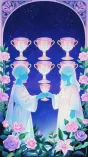
4. Past
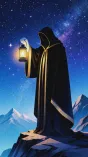
1. Present
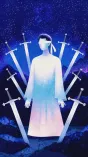
2. Challenge
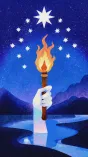
6. Near future

3. Foundation
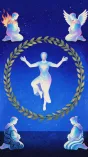
10. Outcome
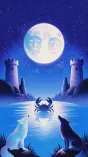
9. Hopes & fears
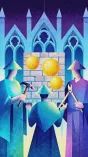
8. Environment
7. Yourself
Reading tips
- Start with cards 1 and 2 together.
- Compare 3 (root) with 5 (aim), and 4 (past) with 6 (near future).
- Read 10 last, alongside 7 and 9: your attitude and hopes often shape the outcome.
- Treat the outcome as a direction, not a verdict.
FAQ
Is the Celtic Cross good for beginners? It is longer, so many people start with three cards, then move up.
What if the outcome card is difficult? Look at cards 7 and 9. They show what you can change.